
Beach Wellness MD
All treatments

Minimally invasive treatment for knee pain

Genicular Artery Embolization (GAE) Treatment in Los Angeles

Genicular artery embolization (GAE) uses imaging to guide treatment through a small catheter into blood vessels around the knee. It can help selected patients with pain from osteoarthritis or repeated bleeding into the joint.

Request a consultation
A man seated on a stair with a hand on his knee

A Minimally Invasive Treatment Option for Persistent Knee Pain

When knee pain makes walking, stairs, or everyday activities difficult, the cause matters. Genicular artery embolization can help selected patients with osteoarthritis-related inflammation or repeated bleeding into the knee joint, known as hemarthrosis.

Symptoms and concerns we help with

  • Knee pain, aching, or tenderness that limits walking and daily activities
  • Swelling, warmth, redness, or stiffness around the knee
  • Morning stiffness or difficulty bending and straightening the knee
  • Creaking or cracking with movement
  • Repeated bleeding into the knee joint, called hemarthrosis
  • Unusual bruising or a tingling or bubbling sensation around the joint

Understanding Knee Osteoarthritis and Recurrent Joint Bleeding

Knee osteoarthritis

Osteoarthritis develops as the cartilage cushioning the knee wears down. It can cause pain with activity, morning stiffness, swelling, and difficulty moving the joint. Age, excess weight, family history, and repeated stress or injury can increase the risk.

Bleeding into the knee joint

Hemarthrosis means bleeding inside a joint. In the knee it can cause pain, swelling, warmth, bruising, and reduced movement. It can follow an injury or surgery, or occur with a bleeding disorder or blood-thinning medication. Repeated episodes can damage the joint. Embolization may help selected patients by closing the vessels responsible for repeated bleeding.

Finding the right treatment for your knee

An examination, X-rays or MRI, and sometimes blood tests help identify the cause. Osteoarthritis care may include physical therapy, medication, bracing, or injections. Bleeding into the joint may require drainage and treatment of the underlying cause. GAE is one option to discuss when symptoms persist; some people need orthopedic surgery.

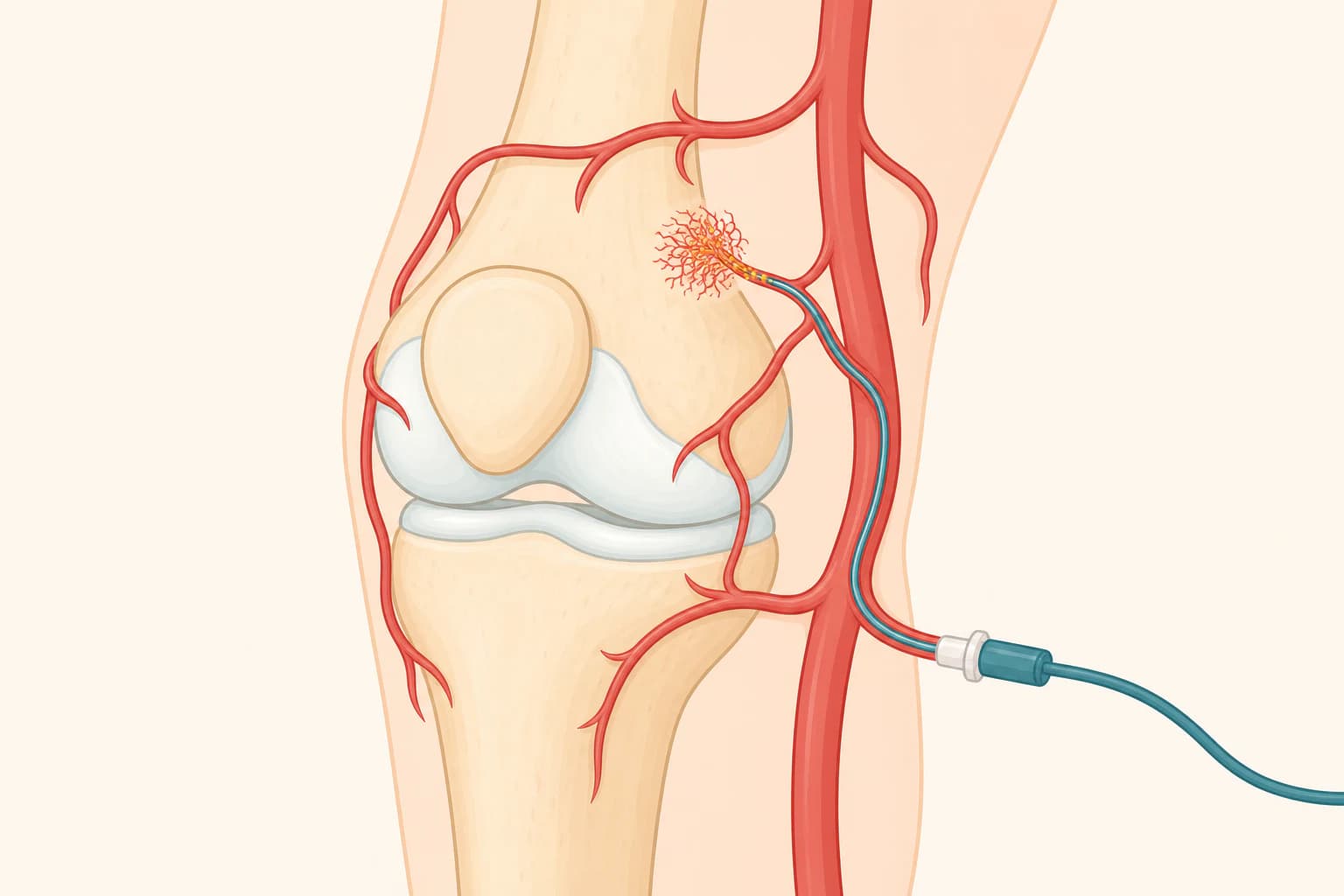
Educational illustration of a microcatheter treating abnormal small vessels near an osteoarthritic knee while preserving the main artery
Simplified patient education illustration; anatomy and treatment vary by patient.

How Genicular Artery Embolization Works

How GAE works

Through a small access point, your interventional radiologist guides a catheter into selected arteries around the knee. Tiny particles reduce abnormal blood flow to inflamed tissue while preserving essential circulation.

Treatment without open knee surgery

The procedure is generally performed with local anesthetic and sedation, followed by observation and same-day discharge. It does not remove tissue from the joint or replace cartilage.

For inflammation or repeated bleeding

For osteoarthritis, treatment aims to reduce blood flow to inflamed tissue around the joint. For recurrent hemarthrosis, embolization targets the vessels responsible for bleeding. Your symptoms and imaging help us decide whether either approach is suitable.

A woman seated on a garden bench

Personalized GAE Treatment Planning

  • Small arterial access site
  • No joint implant or surgical incision
  • Outpatient image-guided treatment
  • Individualized selection based on symptoms and imaging
  • Recovery that is generally shorter than joint replacement
What we review at your consultation

We ask where your knee hurts, whether it swells or gives way, and what you have already tried. We review imaging, medicines, physical therapy, injections, and any previous surgery. If you have repeated bleeding into the joint, we also look at possible causes. Infection, severe instability, and other knee problems may need a different treatment.

What to Expect From Your GAE Evaluation and Procedure

A person holding their knee over their jeans
01

Confirm the source

History, examination, and imaging help determine whether osteoarthritis-related inflammation is likely driving pain.

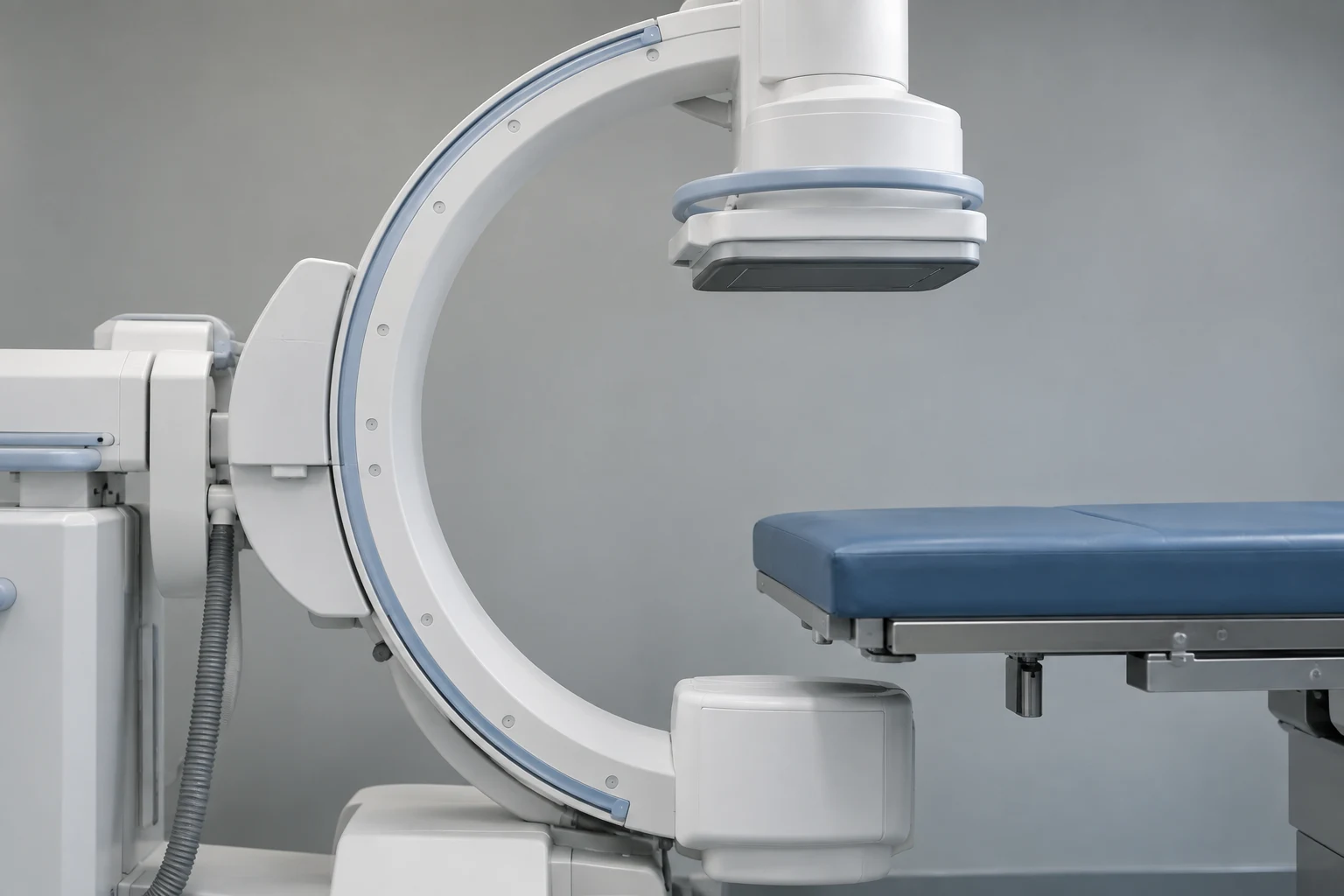
Illustrative fluoroscopy equipment beside a procedure table
02

Map the vessels

Angiography identifies the small genicular arteries associated with the painful area.

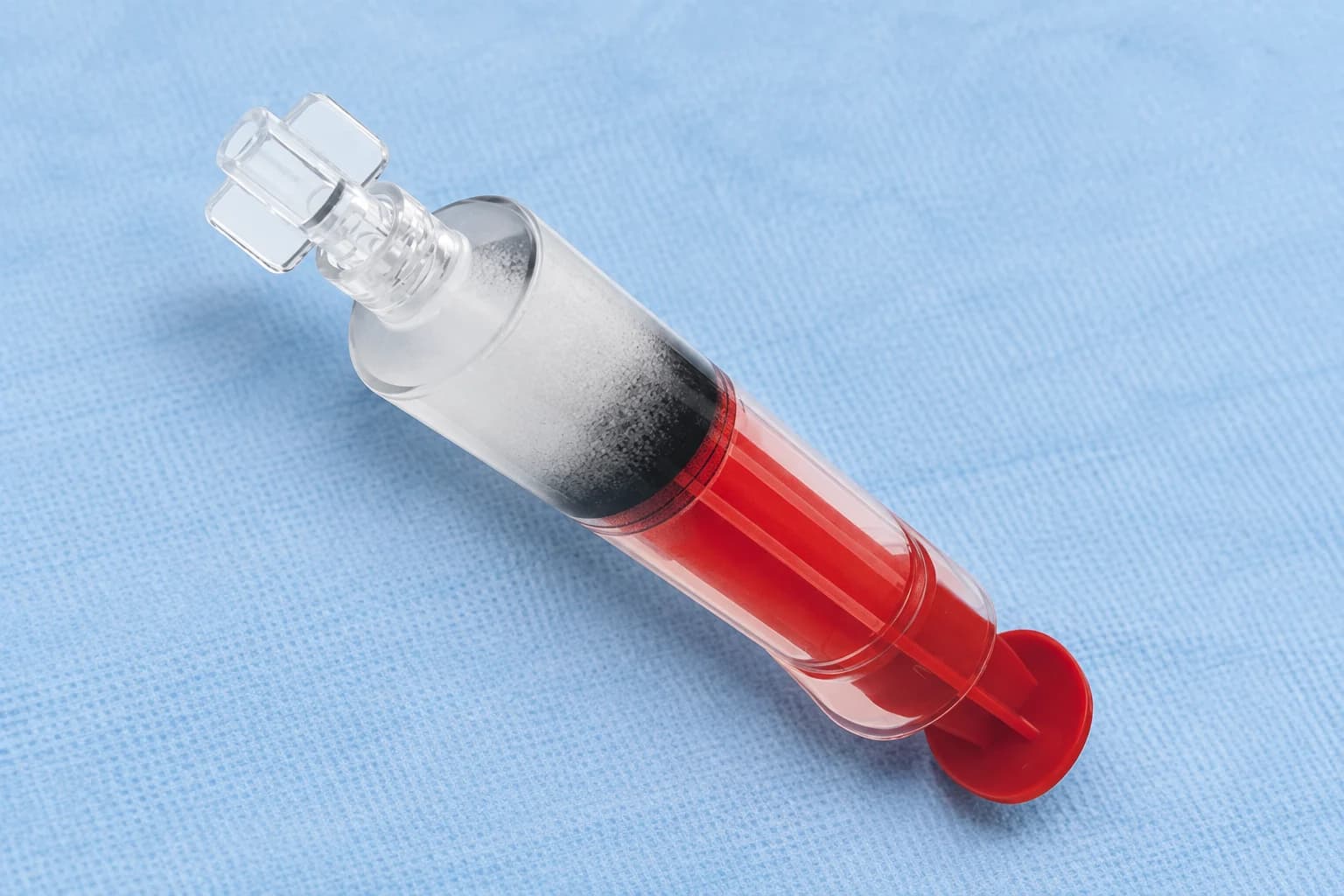
Illustration of a capped embolization microsphere syringe
03

Treat selectively

Tiny particles are delivered to reduce abnormal inflammatory blood flow while preserving normal circulation.

Older adults walking through a park carrying exercise mats
04

Track function

Follow-up focuses on pain, walking, activity, and whether additional care is needed.

Recovery and Follow-Up After Genicular Artery Embolization

Patients commonly return home the same day. Temporary soreness, bruising, or skin discoloration can occur. Activity guidance is individualized, and improvement—when it occurs—may develop over several weeks.

Illustrative lifestyle scene of everyday activities

Frequently Asked Questions About GAE for Knee Pain

Does GAE replace knee replacement?

Not necessarily. GAE is a different option for selected patients. Some people may still need orthopedic surgery, while others may use GAE as part of a broader nonsurgical plan.

How do I know if my pain is from osteoarthritis?

Symptoms alone cannot confirm the cause. A clinician reviews your history, examination, and imaging before discussing GAE.

Is GAE experimental?

GAE is an evolving image-guided treatment supported by a growing body of research. Its suitability, coverage, and expected benefit should be discussed with an experienced clinician.

Clinical education sources

Schedule a GAE Consultation in Los Angeles

Meet with our team to discuss your symptoms, review your records, and understand your treatment options.

Request a consultation